
On On Dash
 Stickman Kombat 2D
 Geometry Black Ball
 Melon Sandbox
 Hole Io
 Paper Minecraft
 Geometry Dash Happy Halloween
 Geometry Dash 3D
 Geometry Dash Lite
 Geometry Dash Wave
 No Broke Dash
 Geometry Dash Meltdown 3D
 Geometry Dash Slow
 Another Drink Dash
 Geometry Dash Onward
 Victory Lap Dash
 Geometry Dash Grief
 Geometry Dash Polargeist
 I Just Might Dash
 Geometry Dash Wave Challenge
 Geometry Dash Press Start
 Geometry Dash Demons
 Gaminia
 Infrunami
 Geometry Dash Retray
 Geometry Dash Tidal Wave
 Geometry Dash Switch
 Geometry Vibes 3D
 Geometry Dash Hairless Adventure
 Geometry Dash Suponho
 Geometry Dash Daily Level: Dream World
 Geometry Dash World
 Geometry Jump
 Geometry Jump 2
 Geometry Dash Breeze 3D
 Geometry Arrow
 Geometry Dash Bloodbath
 Geometry Dash Spam 3D
 Geometry Dash Subzero 3D
 Geometry Arrow 3D
 Crazy Roll 3D
 Geometry Dash Lite 3D
 Geometry Dash Scratch
 Geometry Dash Subzero
 Geometry Dash Spam
 Geometry Dash Meltdown
 Geometry Dash Breeze
 Geometry Vibes
 Geometry Dash Deadlocked
 Count Masters
 Talking Tom Gold Run
 Subway Surfers
 Endacopia
On On Dash: A Dash Through Sky, Storm, Stone, and Steel
A Run That Keeps Changing Its Mind
On On Dash is a browser game hosted on the Geometry Dash Levels website, and what makes it recognizable is less a single trick than the way one repeated idea, the timing of a dash, keeps being asked to survive in surroundings that refuse to stay the same. A run begins among clouds, drifts into the whirling threat of tornadoes, climbs or cuts through mountain stretches, passes the spinning blades of fans, threads the turning teeth of gears, and finally meets the sharp, sudden danger of lightning, so that the player is effectively crossing a small catalogue of hostile environments in a single sitting. That progression is the first thing worth noticing, because it gives the game an identity that goes beyond its name, and because it turns what could have been a monotonous exercise in reflexes into something closer to a journey with a recognizable shape.
The experience that follows from this structure is one of constant recalibration, since each new setting quietly changes what a good decision looks like even when the underlying action stays the same. Open sky and drifting clouds invite a relaxed reading of the space, whereas the sight of a tornado, a fan, or a gear immediately tells the eye that something is moving, that the movement has a pattern, and that the pattern must be understood before it can be beaten. In this sense the scenery in On On Dash does more than decorate the run, because it works as a kind of visual vocabulary that teaches the player, section by section, which kind of attention the next few seconds will demand.
That variety raises the question that pulls players back after every failed attempt, which is whether a player can carry a steady sense of timing across environments that each punish a slightly different mistake. It is one thing to survive a calm opening stretch and quite another to arrive at the machinery and the lightning with the same composure, and it is exactly this gap between early comfort and late pressure that gives each run its tension and each restart its small promise of improvement. As an editorial note, the progression from natural to mechanical to electrical hazards is a reading of the order described by players rather than a stated design intention, and nothing here should be taken as a claim about what the creators planned.

Figure 1. A ship like character soaring through a cloud filled sky
How On On Dash Plays: Genre, Goals, and the Loop That Repeats
On On Dash sits comfortably in the family of short, replayable browser arcade games, where a clear objective, an immediate penalty for error, and an instant restart combine to produce the familiar cycle of attempt, failure, adjustment, and another attempt. The goal, as the structure of the run suggests, is to get as far as possible through the sequence of scenic sections without being stopped by the hazards that define each one, and because every section has its own visual identity, progress is easy to read at a glance, since a player always knows roughly where they are in the journey by looking at what surrounds them.
Core Gameplay and Player Decisions
At the heart of the loop is a decision that has to be made again and again, namely when to commit to movement and when to hold back, and the quality of the game depends on how interestingly the surroundings complicate that decision. In the cloud stretches the choice is likely to feel generous, with plenty of room to learn the rhythm, while in the sections built around tornadoes, fans, and gears the same choice becomes a matter of reading something in motion and picking a moment that fits its cycle, which is a much more demanding form of judgment than simply reacting to a static obstacle. Because the consequences of a mistimed action are immediate, each decision carries real weight, and it is this direct link between a single choice and its outcome that makes the game feel fair even when it feels hard, since the player can almost always trace a failure back to a specific moment of misjudgment.
Difficulty, Progression, and Skill Development
The difficulty of On On Dash appears to rise less through raw speed than through the changing character of its hazards, which means that the skills a player needs shift as the run advances, from general rhythm in the early sections to careful observation of repeating patterns in the mechanical ones and quick, calm reactions when the lightning arrives. Common mistakes in games of this kind tend to come from rushing, from fixating on the obstacle directly ahead instead of the one that follows it, and from carrying the habits of one environment into the next, so that a player who has mastered the timing of the clouds may stumble when the tornadoes demand a different kind of patience. Practice helps precisely because the scenery gives each challenge a recognizable face, allowing players to build a mental library of what each section looks like and what it asks, so that over repeated attempts the run begins to feel less like a series of surprises and more like a sequence that can be anticipated and answered.
Controls and Interaction
On On Dash keeps its controls simple so that timing, not memorization, is the real challenge. Learn how quickly the game responds in the calm opening sections, then carry that feel into the harder ones.
- Dash: Press the spacebar, click the mouse, or tap the screen to dash. This is the one action you will use throughout the run, and it matters most around fans, gears, and tornadoes, where a dash that comes slightly early or late decides whether you pass or fail.
- Restart: Start a new attempt right after a failed run so you can apply what you just learned.
- Devices: Works with a keyboard or mouse on desktop, and with touch on a phone or tablet.
A relaxed hand gives cleaner timing than a tense one, so settle on one input method and stick with it until the rhythm feels natural.
Scenery as Language: How On On Dash Looks and Sounds
The presentation of On On Dash works best when it is understood as a communication system, because each environment tells the player what kind of danger to expect before any danger actually arrives, and that early warning is one of the most important ways the game stays readable as it grows more intense.
Visual Composition and Level Readability
The shift from clouds to tornadoes, mountains, fans, gears, and lightning gives the run a strong visual hierarchy, in which the type of hazard is instantly identifiable by its silhouette and its implied motion, so that a spinning blade reads as a rhythm to be timed, a turning gear reads as a gap to be judged, and a swirling storm reads as a force to be avoided. This matters for readability because a player who can recognize a hazard at a glance has more time to decide what to do about it, and the clear separation between the sky, weather, terrain, and machinery sections helps ensure that the screen never becomes a confusing mixture of unrelated threats.
Color, Lighting, and Visual Feedback
Because the game moves through such different settings, color and lighting are likely to carry much of its emotional range, with open and airy tones suiting the cloud sections and darker, more charged tones suiting the storm and lightning stretches, though the specific palette is something each player will judge for themselves when they play. In an editorial sense, the lightning sections deserve special mention, since a flash of light is among the most effective ways a game can signal sudden danger, and it gives the final stretches a sense of urgency that the calmer opening could not provide on its own.
Sound Design and Musical Rhythm
Audio details for On On Dash have not been verified for this article, so no claim is made about whether the music follows the obstacles or whether particular sound effects accompany specific hazards. Players who enjoy rhythm driven games may still want to play with sound on, since audio feedback often helps in judging timing, and they can decide for themselves how closely the sound supports the moment to moment action.
The Six Settings That Define the Challenge
The most defining feature of On On Dash is its sequence of distinct environments, and the clearest way to understand the game is to look at what each one contributes to the run, with the caveat that the precise behavior of each hazard is something to confirm in play.
Clouds
The cloud sections open the run and set the visual tone of the sky, and they matter because they give players a gentler space in which to find their rhythm before the game begins to apply real pressure, which means that the habits formed here, such as staying relaxed and learning how quickly the game responds, carry directly into every harder section that follows.
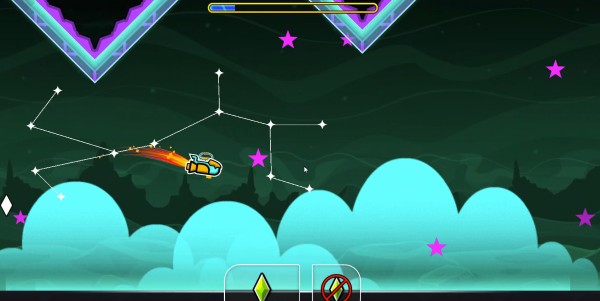
Figure 2. Screen showing a scene of clouds
Tornadoes
The tornado stretches introduce a threat that reads as a force of nature, asking the player to respect distance and timing instead of simply pushing forward, and they matter because they mark the point at which the run stops being forgiving and starts to test judgment, since a swirling hazard cannot be passed by luck alone and must be read before it can be answered.
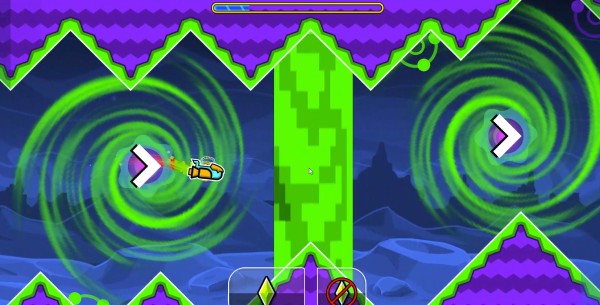
Figure 3. Screen showing a scene of tornadoes
Mountains
The mountain sections change the shape of the space itself by presenting terrain to be cleared or navigated rather than a single hazard to be dodged, and they matter because they require the player to think about spacing and approach as well as reaction, so that success depends on lining up a move early instead of scrambling at the last moment.

Figure 4. Screen showing a mountain landscape
Fans
The fans bring moving machinery into the run, and their regular, repeating motion suggests a pattern that can be learned, which is why they matter so much to patient players, since they reward careful observation of the cycle and punish hurried commitment, turning a few seconds of watching into the difference between passing cleanly and failing early.
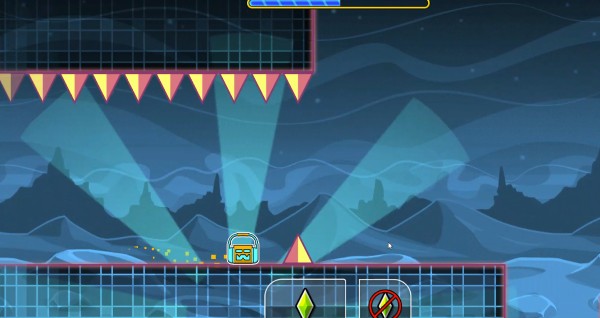
Figure 5. Screen showing a scene with wind turbines
Gears
The gear sections continue the mechanical theme and place a premium on precision, since turning parts tend to demand careful attention to both rotation and gaps, and they matter because they test whether a player has truly absorbed the habit of reading before acting, a habit that the earlier fan and tornado sections only begin to build.
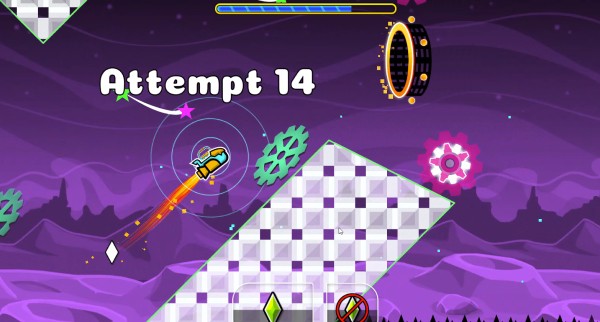
Figure 6. Screen showing the character flying past the gears
Lightning
The lightning stretches deliver the sharpest sense of urgency, because a strike is a hazard that calls for composure under pressure, and they matter because they form a fitting climax to a run that has been steadily raising the stakes, rewarding the player who arrives with the same calm timing that carried them through the sky, the storms, and the machinery.
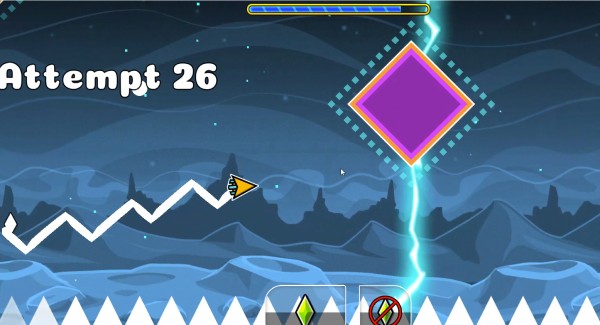
Figure 7. Screen showing an arrow flying diagonally through bolts of lightning
Practical Guidance for the Hard Moments
The most useful advice for On On Dash follows directly from its structure, since a game made of distinct environments rewards players who treat each environment as its own small problem.
- Treat each setting as a new puzzle. Because the scenery changes the nature of the challenge, a player who consciously resets their attention at every transition will usually fare better than one who coasts on the habits of the previous section, and the reason is simply that the timing which worked among the clouds cannot be assumed to work among the gears.
- Watch the pattern before committing. In sections built around fans, gears, and tornadoes, the most reliable technique is to spend a moment observing how the hazard moves before acting, since repeating motion can be predicted and a predicted hazard is far easier to pass than a surprising one.
- Look one obstacle ahead. A common beginner mistake is to focus entirely on the obstacle directly in front of the character, which leaves no time to prepare for the next, and training the eye to glance ahead gives the player a small but meaningful head start on every decision.
- Use the calm sections to settle your rhythm. The early, open stretches are the best place to find a steady feel for the game, because a player who arrives at the harder sections already comfortable will have more mental room to read what is happening instead of merely reacting to it.
- Stay composed when the lightning arrives. Late run hazards punish panic more than slowness, so the best approach is to breathe, keep the same measured timing that carried you this far, and resist the temptation to rush simply because the atmosphere has become more intense.
Video
Frequently Asked Questions
Who is On On Dash for?
This game is designed for those who enjoy short, highly replayable arcade challenges that require keen observation and precise timing. With its diverse settings, the game feels more like a journey of discovery than a monotonous, repetitive loop.
What should beginners focus on first?
New players should use the early segments to get comfortable with the game's pace and avoid the urge to rush. Habits formed during these calmer sections will prove invaluable when facing more difficult parts later on.
What types of environments are in the game?
Your journey will take you through areas featuring clouds, tornadoes, mountains, mechanical fans, gears, and lightning bolts. Each environment introduces unique obstacles, requiring players to focus in different ways.
What control scheme does On On Dash use?
The game is built around a single dash action. Check the on screen instructions at website to confirm the exact input for your device.
Is the order of environments the same every time?
The sequence described in this article follows the order players typically encounter. The best way to confirm whether it stays fixed is to play several runs and compare.
What makes On On Dash different from other dash games?
Its defining quality is the way one repeated action is tested across a wide range of themed environments, which gives the game a sense of progression and variety that simpler dash titles often lack.
Why On On Dash Rewards the Player Who Pays Attention
On On Dash earns its appeal by combining a simple, timing driven challenge with a sequence of environments that keeps reshaping what that challenge demands, so that the journey from clouds through tornadoes, mountains, fans, gears, and lightning feels like a steady rise in tension rather than a repetition of the same obstacle. It is a game best suited to players who enjoy learning patterns, who find satisfaction in small improvements from one attempt to the next, and who appreciate a run that has a recognizable arc, although those who prefer relaxed or forgiving play may find the later sections demanding. To see how far your timing can carry you through every setting, you can play On On Dash online at Geometry Dash.