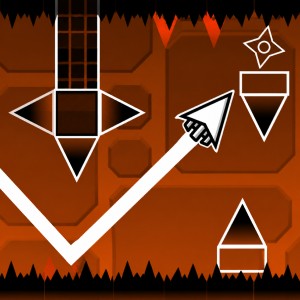
Geometry Dash Wave
 Stickman Kombat 2D
 Geometry Black Ball
 Melon Sandbox
 Hole Io
 Paper Minecraft
 Geometry Dash Happy Halloween
 Geometry Dash 3D
 Geometry Dash Lite
 Geometry Dash Scratch
 On On Dash
 No Broke Dash
 Geometry Dash Meltdown 3D
 Geometry Dash Slow
 Geometry Dash Subzero
 Geometry Dash Spam
 Another Drink Dash
 Geometry Dash Onward
 Geometry Dash Grief
 Geometry Dash Meltdown
 Geometry Dash Breeze
 Victory Lap Dash
 Geometry Dash Polargeist
 Geometry Dash Deadlocked
 I Just Might Dash
 Geometry Dash Wave Challenge
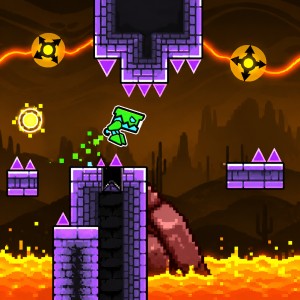 Geometry Dash Press Start
 Geometry Dash Demons
 Gaminia
 Infrunami
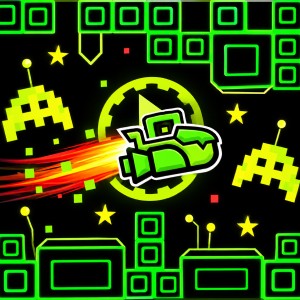 Geometry Dash Retray
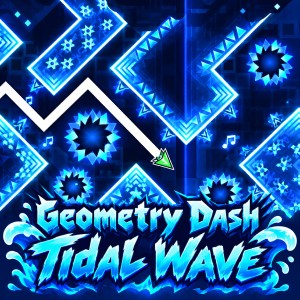 Geometry Dash Tidal Wave
 Geometry Dash Switch
 Geometry Vibes 3D
 Geometry Dash Hairless Adventure
 Geometry Dash Suponho
 Geometry Dash Daily Level: Dream World
 Geometry Dash World
 Geometry Jump
 Geometry Jump 2
 Geometry Dash Breeze 3D
 Geometry Arrow
 Geometry Dash Bloodbath
 Geometry Dash Spam 3D
 Geometry Dash Subzero 3D
 Geometry Arrow 3D
 Crazy Roll 3D
 Geometry Dash Lite 3D
 Geometry Vibes
 Count Masters
 Talking Tom Gold Run
 Subway Surfers
 Endacopia
What Makes Geometry Dash Wave Unique?
Geometry Dash Wave stands out through its combination of simple controls and demanding obstacle courses, creating a gameplay experience that is easy to understand but requires practice to master. The geometric environments feature sharp angles, narrow passages, and dangerous spikes that challenge players to maintain precise control while navigating each section.
The most distinctive element is the wave movement mechanic, which allows the icon to travel diagonally upward and downward instead of relying on traditional jumping. This system creates a continuous flow of movement, requiring accurate inputs and quick reactions whenever the route changes. Even a small mistake can lead to a collision, making timing and consistency essential throughout each level.
The visual presentation also contributes to the game's identity, as geometric shapes, contrasting colors, and dynamic effects help distinguish obstacles from safe paths. When paired with energetic background music, these elements create an engaging atmosphere in which movement and rhythm work together to make every obstacle course feel challenging and rewarding.

Figure 1. Designed logo for the game
The Concept Behind Geometry Dash Wave
The concept behind Geometry Dash Wave focuses on turning a straightforward control system into a challenging arcade experience that rewards precision and persistence. The Geometry Dash series is widely recognized for its geometric art style, music inspired gameplay, and obstacle based platforming, while the wave mechanic introduces a different approach that places greater emphasis on directional control.
Accessibility is an important part of this concept because the basic controls can be understood quickly, even by newcomers to wave based games. However, the difficulty increases as obstacle arrangements become more complicated, introducing narrow corridors, sharp turns, and sequences that require frequent changes in direction. This gradual progression encourages players to develop better timing and control without making the mechanics unnecessarily complicated.
Another important aspect is the relationship between level design and visual clarity, since recognizable shapes and clearly defined hazards help communicate the safest route through each section. Combined with rhythmic audio and dynamic visual effects, these design elements support a cohesive arcade experience that emphasizes concentration, coordination, and consistent movement.
The World of Geometry Dash Wave
Geometry Dash Wave can be presented through an imaginative digital setting filled with glowing geometric structures, floating platforms, and dangerous corridors that create a distinctive visual atmosphere. Although a specific official storyline has not been confirmed for every version using this title, this creative interpretation offers a thematic framework for describing the game's environment.
In this imagined world, a small wave shaped icon travels through interconnected areas where each route presents a different combination of obstacles and geometric formations. The journey leads through narrow tunnels, steep diagonal passages, and sections surrounded by sharp spikes, gradually introducing more complicated layouts as the environment becomes increasingly demanding.
Each area represents another stage in the journey, with changing colors and obstacle patterns helping establish a sense of progression. The wave must navigate these environments through careful movement and accurate timing, making the journey a symbolic representation of persistence and skill development rather than a traditional story driven by dialogue or character interactions.
The central theme is perseverance in the face of increasing difficulty, as the wave continues through dangerous paths that require concentration and consistent control. This interpretation complements the game's visual style and gameplay mechanics while remaining separate from any unverified official narrative.
Gameplay in Geometry Dash Wave
Geometry Dash Wave focuses on guiding a wave icon through dangerous paths. The main objective is to avoid spikes, walls, and other obstacles. Each level introduces different challenges. More difficult sections require faster reactions and greater control.
The gameplay is easy to understand but challenging to master. Players must carefully manage the wave's direction. They also need to anticipate obstacles before reaching them. Accurate movements are essential for navigating narrow passages and completing difficult sections.
Controls
The controls in Geometry Dash Wave are simple and responsive. The exact control scheme may vary depending on the version.
- Left Mouse Button: Hold to move the wave diagonally upward. Release to move downward.
- Spacebar: Hold to move upward and release to move downward in supported versions.
- Up Arrow Key: Use as an alternative control in versions that support keyboard input.
- Touchscreen: Tap and hold to move upward. Release to move downward on supported mobile devices.
Mastering these controls requires practice and consistent timing. Short inputs can help navigate narrow passages. Longer inputs may be useful when the path allows more space. Understanding how the wave responds to each action helps improve movement accuracy.
Tips for Overcoming Challenges
- Successful navigation depends on controlling the duration of each input.
- Quick taps and releases help guide the wave through tight corridors.
- Careful movements also reduce the risk of hitting spikes and walls.
- Recognizing upcoming obstacles allows adjustments before reaching dangerous sections.
- Learning the patterns of difficult areas can also make repeated attempts more effective.
As the difficulty increases, precision becomes more important than speed alone. Consistent movements help the wave follow narrow paths. With well timed inputs, even complicated obstacle sequences become easier to understand.
Wave Levels in Geometry Dash Wave
The three maps described below follow a progression from basic movement to more demanding obstacle courses. Each map introduces a different level of challenge and highlights the importance of timing and control.
Map 1
Map 1 introduces the basic wave mechanics through relatively simple paths and open spaces, the level features straightforward obstacles that help explain the movement system. Players can become familiar with directional changes while learning to avoid spikes and walls.
As the course progresses, additional turns introduce slightly more demanding challenges. The level encourages careful timing and controlled movements. Its gradual difficulty makes it a suitable starting point for understanding the central mechanics of game.
Map 2
Map 2 increases the difficulty with narrower passages and sharper turns, the obstacle arrangements become more complex. The wave must move through tight spaces while avoiding spikes and dangerous barriers.
This map places greater emphasis on precision and reaction speed, sudden changes in direction leave less room for mistakes. Careful timing becomes essential for navigating each section. The increased challenge creates a natural progression from the basic mechanics introduced in Map 1.
Map 3
Map 3 presents a more demanding challenge with tight corridors and consecutive turns. The obstacle patterns require accurate movements and consistent control. Limited space makes it harder to correct mistakes during difficult sections.
The level builds on the skills required in the previous maps and players must respond quickly to changing paths and maintain precise directional control. Its challenging layout makes Map 3 a fitting conclusion to the proposed three map progression. Check out the videos of the maps below this video.
Conclusion
Geometry Dash Wave combines simple controls with challenging wave based gameplay, its geometric environments and obstacle filled paths create an arcade experience that emphasizes precision and timing. Each map can introduce new challenges and encourage the development of better control. From its distinctive movement mechanic to its progressively difficult levels, the game offers an engaging concept for fans of skill based arcade games. Its straightforward design makes the basic mechanics accessible while leaving room for improvement through practice.